



 Staff Writer
 Produce farmers tend to use Cytokinin to increase their crop yields, given that it is known to promote plant cell division and growth.
What is cytokinin?
Cytokinin is the hormone responsible for triggering cellular formation during the germination phase of cannabis seeds, and at the same time, the cytokinins also signal the start of the growth phase for the gibberellins. The embryo then continues to expand in size, utilizing the supply of food stored within the seed for growth.

Cytokinins engage in local and long-distance signalling, with the same transport mechanism as purines and nucleosides. Generally speaking, cytokinins are conveyed via the cannabis plant’s xylem (one of two pathways in the cannabis plants vascular system, the other being ‘Phloem’).
Cytokinins act synergetically with auxin, another plant growth hormone. The two are complementary, having generally opposite effects.
Different types of Cykotinins?
As you may have guessed, there is more than one type of Cykotinin, and you’d be right to assume so. In fact, there are presently two known types of cytokinins:
Adenine-type cytokinins
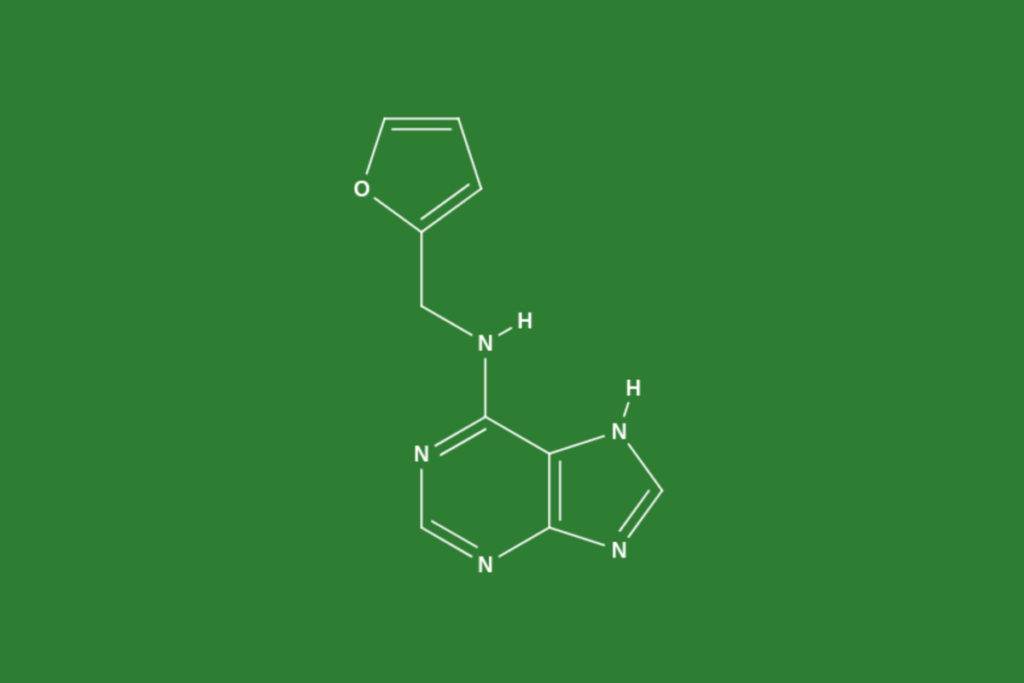
Adenine-type cytokinins are represented by compounds called kinetin, zeatin, and 6-benzylaminopurine.
Most adenine-type cytokinins are synthesized in the roots of cannabis plants, however, Cambium and other actively dividing tissues also synthesize cytokinins.
Phenylurea-type cytokinins
Phenylurea-type cytokinins are represented by compounds called diphenylurea and thidiazuron (TDZ).
These compounds are less relative to us, as so far as we know, no phenylurea cytokinins have been found in any plants, nevermind cannabis, but it is still nice to learn about.
Uses for Cytokinin
Increasing Produce Yields
Produce farmers tend to use Cytokinin to increase their crop yields, given that it is known to promote plant cell division and growth. A study where scientists applied Cytokinin to cotton seedlings found that it led to a 5–10% increase in overall yield, under drought conditions.
Plant Pathogenesis
More recent studies have since uncovered the role played by Cytokinins in plant pathogenesis. To give an example, Cytokinins have been reported to affect resistance against Pseudomonas syringae (a plant pathogen that can infect a wide array of species) in Arabidopsis thaliana (a small flowering plant that is widely used as a model organism in plant biology) and Nicotiana tabacum (cultivated tobbacco).
Cytokinins also seem to have a potential role to play in connection with the biological control of plant diseases. Studies show that the production of Cytokinins by Pseudomonas fluorescens G20-18 (a type of bacterium) has been distinguished as a fundamental determinant to efficiently control the infection of Arabidopsis thaliana with Pseudomonas syringae.





Does your website have a contact page? I’m having a tough time locating it but, I’d like to shoot you an e-mail. I’ve got some ideas for your blog you might be interested in hearing. Either way, great website and I look forward to seeing it improve over time.
You’re welcome to send us an email with your ideas and contact details via our form here: https://nuggiehub.com/advertise-with-us/
Thanks!
NuggieHub Support